3 Aug 2026
How Tiered Access Programs Connect to Varied Transaction Options in Handheld Gaming Setups
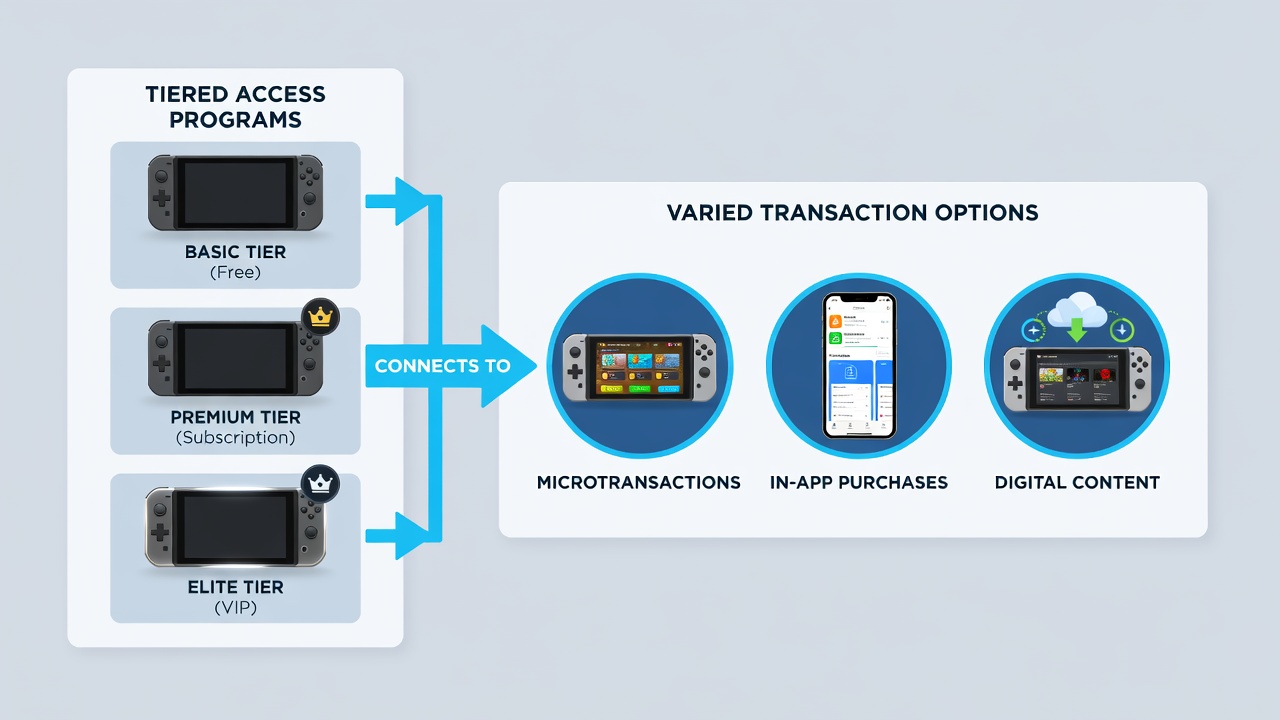
Handheld gaming setups have expanded rapidly in recent years, and tiered access programs now link directly to the range of transaction options available on mobile platforms. Developers design these systems so that entry-level users start with basic payment methods while higher tiers unlock additional gateways such as digital wallets, bank transfers, and instant payout services. Data from industry reports show that this structure emerged as mobile gaming revenue climbed through 2025 and into 2026.
Tier Structures in Portable Gaming Environments
Observers note that most handheld gaming applications organize access into three to five tiers based on activity metrics including play frequency, deposit volume, and session duration. Entry tiers typically restrict users to standard credit card processing and limited e-wallet functions, whereas mid-level participants gain access to prepaid card options and regional payment processors. Top tiers often integrate cryptocurrency channels and priority settlement networks, and analysts from the American Gaming Association track these patterns across North American markets.
Research indicates that progression between tiers depends on algorithmic scoring rather than manual review in most cases. The system evaluates real-time data from device sensors and transaction histories, then adjusts available payment rails automatically. This automation reduces processing delays while maintaining compliance with regional financial regulations that differ between the United States, Canada, and Australia.
Transaction Options and Their Integration Points
Transaction variety in handheld setups includes traditional cards, mobile carrier billing, bank redirects, and emerging instant methods. Studies reveal that higher-tier accounts receive priority routing through faster processors, which shortens settlement times from days to minutes in supported jurisdictions. Figures released in August 2026 by Canadian regulatory bodies documented a 14 percent increase in instant payout usage among premium-tier mobile users compared with the previous year.
Security protocols scale alongside tier status. Lower tiers rely on standard encryption layers, while advanced tiers incorporate additional authentication steps such as biometric confirmation and device fingerprinting. Industry organizations report that these layered protections correlate with lower fraud rates in handheld environments where portable hardware faces greater exposure risks than stationary consoles.
Technical Connections Between Access Levels and Payments
Backend architecture connects tier status to payment gateways through API handshakes that query user profiles before authorizing any transaction. When a player initiates a deposit or withdrawal, the system checks current tier data and routes the request to compatible processors only. This prevents lower-tier accounts from attempting methods reserved for higher levels, and the approach maintains consistency across both iOS and Android handheld devices.
One study released by a European research consortium examined over 2 million mobile gaming sessions and found that tier-based routing reduced failed transaction attempts by 23 percent. The same analysis noted that users who advanced tiers showed higher retention rates, partly because expanded payment choices matched their preferred funding sources more closely. Developers continue to refine these linkages as new payment technologies reach handheld markets.
Regional Variations and Regulatory Influences
Regulatory frameworks shape how these connections operate across borders. In Australia, state-level oversight requires clear disclosure of tier requirements before any payment method appears in the interface. Meanwhile, certain U.S. states mandate separate licensing for each additional transaction channel, which influences how quickly developers can roll out new options to higher-tier handheld users. Observers tracking August 2026 filings note that several operators adjusted their tier thresholds in response to updated compliance guidance from multiple jurisdictions.
Payment providers themselves adapt offerings to align with tiered systems. Some processors now offer volume-based discounts exclusively to premium accounts, creating financial incentives that reinforce the tier structure. Data shared by academic researchers at a Canadian university indicated that these incentives increased average deposit sizes among top-tier users by measurable margins during the first half of 2026.
Future Developments in Handheld Integration
Engineers continue testing deeper integration between tier data and emerging transaction technologies such as contactless NFC payments and embedded device wallets. Early trials suggest that top-tier users may soon complete transfers without leaving the gaming application, while lower tiers retain standard browser redirects. These advancements depend on continued collaboration between gaming platforms, payment networks, and device manufacturers.
Evidence suggests that the connection between tiered access and transaction variety will grow more sophisticated as handheld hardware capabilities advance. Operators monitor performance metrics closely, adjusting both tier criteria and available payment rails to match evolving user patterns recorded across global markets.
Conclusion
Tiered access programs and varied transaction options in handheld gaming setups function through interconnected backend systems that scale payment availability according to user status. Regulatory requirements, security protocols, and processing efficiencies all influence how these elements combine. Data collected through 2026 demonstrate measurable impacts on transaction success rates and user retention when the two components align effectively. Continued technical refinements are expected to maintain this linkage as mobile platforms evolve.